




Moving in Winter in Toronto: How to Move Safely Through Snow and Ice
Nobody dreams of moving in February. But here is something most people in Toronto miss: winter is often the smartest time to do it. The trucks are free, the rates are lower, and the crew can give your move their full attention instead of squeezing it between five others. The catch is the weather, and the weather in this city does not negotiate. With a bit of planning and a few sensible winter moving tips, though, a cold-weather move can be cheaper, calmer, and just as safe as one in July. Here is how to pull it off.
Why winter can be the best time to move in Toronto
Peak moving season runs May through September, when demand spikes and prices climb with it. The cold months are the opposite. Fewer people move, and that works in your favour in three ways.
You get your pick of dates, including the month-end and weekend slots that disappear in summer. You often pay less, because many movers drop their off-season rates or simply have more room to be flexible. And you get faster, more attentive service, since the crew is not racing the clock to reach the next job. If saving money and locking in the exact date you want matter to you, the off-season is quietly the best time to move in Toronto. The only trade-off is that you have to prepare for the conditions, which is what the rest of this guide is for.

The winter moving challenges nobody warns you about
Cold does more than make you uncomfortable. Ice hides under fresh snow, so a path that looks clear can still drop someone carrying your couch. Slush gets tracked across floors and turns hallways slick. Salt eats at hardwood. Short daylight means the light is fading by mid-afternoon, so a slow start can leave you loading in the dark. And cold itself is hard on electronics and anything fragile, because the swing from a freezing truck to a warm room causes condensation. None of this is a reason to skip a winter move. It is a reason to plan one properly.
Your winter moving day checklist for Toronto
A good winter move is mostly about removing risk before the truck arrives. Work through these the night before and the morning of.
Clear and salt every path
This is the single most important job, and it falls to you at both ends. Shovel the driveway, walkway, porch, and any stairs at the old place and the new one, then salt or sand them for grip. Knowing how to move in snow and ice really comes down to this: a clear, gritted path is what keeps the crew upright and your belongings off the ground. Keep the shovel and a bag of salt by the door for touch-ups, because Toronto snow has a habit of returning mid-move.
Protect your floors from salt and slush
Everything tracked inside ends up on your floors. Lay heavy-duty floor runners, old blankets, or flattened cardboard along the main path from the door, and put a mat at every entrance for boots. It shields your hardwood from salt stains and water, and it stops the floor from turning into a slip hazard once the snow starts melting indoors.
Pack to protect belongings from cold and moisture
Standard cardboard struggles in wet weather. For anything sensitive, switch to sealed plastic bins, and double-wrap fragile pieces in bubble wrap and blankets for an extra insulating layer. Load electronics last and unload them first to cut their time in the cold, and once they are inside, let them reach room temperature before you plug anything in so condensation can clear. Houseplants are the other quiet casualty of winter moves, so keep them in the warm car with you rather than the truck.
Dress for the work, not the walk to the car
You will be going in and out of heated rooms all day, so layers you can shed and add beat one heavy coat. Waterproof boots with real tread are not optional on icy steps. Keep gloves, hats, and a few hot drinks going for yourself and the crew, and take warm-up breaks, because cold and heavy lifting tire you out faster than you expect.

Toronto-specific things to plan around
A winter move in this city has a few local wrinkles worth flagging early.
Watch for parking and snow-route restrictions. After a heavy snowfall, the city can declare parking bans on major routes, which is a real problem if that is where the truck needs to sit. Check the forecast and the city's snow-route rules, and have a backup spot in mind. If you are in a condo, the freight elevator still needs booking in its usual window, and bear in mind the lobby and loading dock will be wet and busy, which slows the carry.
Mind the calendar and the clock. February brings Family Day, and dates around any long weekend fill up fast, so book early. Plan to start in the morning, since daylight fades by late afternoon in a Toronto winter and an early start hands you the warmest, brightest stretch of the day.
Sort your utilities at both ends. There is little worse than finishing a freezing move and walking into a cold, dark house. Confirm the heat, power, and water are on at the new place before moving day, and keep them running at the old one until you are done.
What professional winter movers in Toronto bring to the day
You can handle plenty of this yourself, but the conditions are exactly where an experienced crew earns their fee. Professional winter movers in Toronto arrive with floor runners and proper padding as standard, trucks that are ready for the roads, and the local knowledge to route around storms and closures. They have carried furniture down icy steps hundreds of times and know how to do it without a slip or a scratch.
Just as important is what a good Toronto moving company does before the day. They watch the forecast with you, give you a clear written quote with no weather-day surprise fees, and tell you straight if conditions look bad enough to move the date. That communication is the difference between a stressful winter move and an easy one.
When to reschedule, and why it is the smart call
Here is the honest part. Some days are not worth moving on. If a major storm or freezing rain is in the forecast, pushing the date by a day or two is the safer choice for your family, the crew, and your belongings. No saving is worth a fall on the ice or a truck sliding on the highway. Build a little flexibility into your plans, keep talking to your movers, and treat a reschedule as good judgement rather than a setback. Winter rewards the people who stay adaptable.
Winter moving in Toronto: FAQs
Is winter the cheapest time to move in Toronto?
Often, yes. Winter is the off-season, so demand drops and many movers offer lower rates and far more date choice than they can in summer. Mid-week and mid-month winter dates tend to be the cheapest of all.
How do you protect furniture and electronics from the cold?
Wrap fragile items in blankets and bubble wrap, use sealed plastic bins instead of cardboard where you can, and load electronics last. Once inside, let electronics warm to room temperature before switching them on so any condensation clears.
What happens if it snows on moving day?
A professional crew will still move in normal snow, with cleared paths and winter-ready trucks. For a heavy storm or freezing rain, the safer call is to reschedule, which is why a little flexibility and good communication with your movers matters.
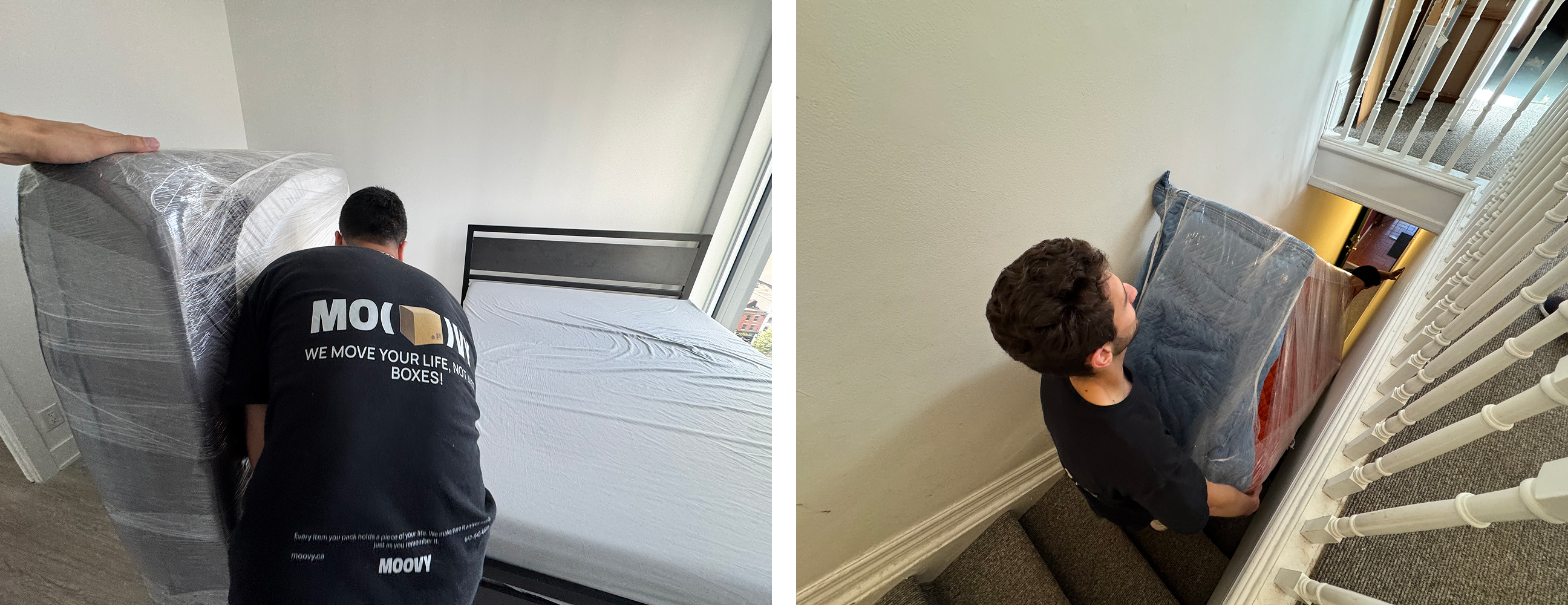
Book your winter move with Moovy
Winter moving in Toronto does not have to be miserable, and it can genuinely save you money if you plan it well. At Moovy, we move homes, apartments, condos, and offices through the coldest months across Toronto and the GTA, from Mississauga and Vaughan to Markham, Oakville, and the Kitchener-Waterloo area. Our crews come prepared with floor protection and padding, our trucks are ready for the weather, and our quotes are written and clear, so the only surprise on moving day is how smoothly it goes.
Planning an off-season move? Tell us your home size, your two addresses, and your date, and we will give you a free, honest estimate. Let us handle the snow and ice so you can settle into your new place, warm and unpacked.